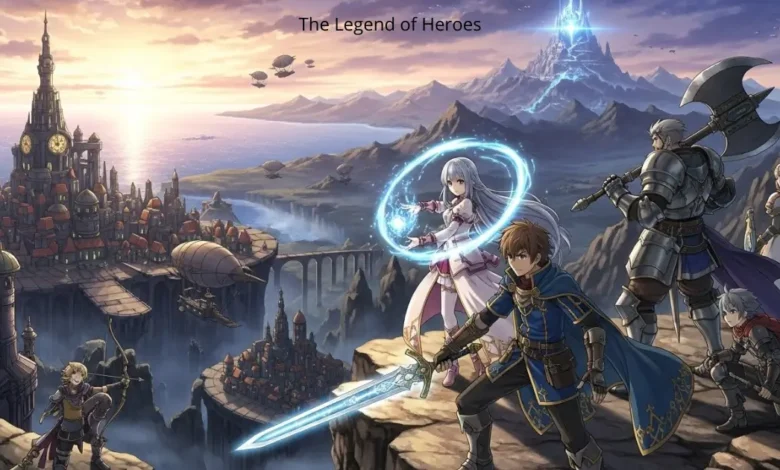
The Legend of Heroes: Trails beyond the Horizon Review delivers an in-depth look at the new JRPG, focusing on its evolved combat system and deeply interconnected narrative.
The Legend of Heroes: Trails beyond the Horizon Review – A New Chapter for JRPG Storytelling
Few long-running JRPG franchises can claim the narrative discipline and mechanical consistency of The Legend of Heroes. With Trails beyond the Horizon, Nihon Falcom does not attempt to reinvent the series; instead, it sharpens its core strengths while addressing long-standing criticisms around pacing and combat complexity. The result is a confident, content-rich RPG that rewards both veteran fans and newcomers willing to commit to its expansive world.
This review examines how the updated combat system elevates moment-to-moment gameplay and how the franchise’s famously interwoven storylines reach a new level of ambition.
Read Also: Ghost of Yōtei Review – A New Samurai Experience Worth the Hype?
A Combat System That Finally Feels Fully Realized
Combat has always been central to the Trails identity, blending turn-based tactics with positioning and ability management. Trails beyond the Horizon refines this formula rather than replacing it, introducing systems that add urgency and strategic depth.
The most noticeable change is the expanded Hybrid Action Gauge, which allows players to chain abilities based on battlefield momentum. Unlike earlier entries, where turns could feel rigid, battles here flow dynamically. Characters can interrupt enemy actions, reposition mid-combat, and trigger conditional bonuses when allies coordinate attacks in real time.
Enemy AI has also seen a meaningful upgrade. Boss encounters are no longer simple endurance tests; they actively punish repetitive strategies and force players to adapt. Status effects, terrain manipulation, and timing now matter more than raw stats, making combat consistently engaging even dozens of hours in.
Character Progression and Customization: Depth Without Bloat
One of the risks of long-running RPG series is feature overload. Trails beyond the Horizon avoids this by streamlining progression systems without sacrificing depth.
The Orbment system returns but with clearer synergies and fewer redundant paths. Each character’s build feels distinct, encouraging experimentation rather than optimization spreadsheets. New passive traits tied to narrative choices subtly reinforce the connection between story and gameplay, making character development feel earned rather than mechanical.
Importantly, customization respects player time. Respec options are more accessible, and experimentation is encouraged instead of punished, a welcome shift for both casual players and completionists.
A Story That Expands the World Without Losing Focus
Narrative has always been the backbone of The Legend of Heroes, and Trails beyond the Horizon leans into this reputation with confidence. The story unfolds across multiple regions, introducing new political tensions while resolving long-running arcs that fans have followed for years.
What sets this entry apart is narrative clarity. While the plot is undeniably dense, it is structured in a way that avoids overwhelming the player. Key events are contextualized through character dialogue rather than exposition dumps, and returning themes—power, loyalty, and the cost of progress—are explored with greater emotional restraint.
New characters are introduced gradually and written with purpose, avoiding the common JRPG pitfall of bloated casts. Meanwhile, legacy characters are given meaningful development rather than fan-service appearances, reinforcing the sense that this world is evolving rather than looping.
World-Building and Exploration: Familiar Yet More Alive
Exploration in Trails beyond the Horizon benefits from subtle but effective enhancements. Towns feel more reactive, with NPC dialogue updating frequently in response to story events. This reinforces the illusion of a living world and rewards players who take the time to engage with side content.
Side quests are more narratively driven than before, often tying directly into larger political or social themes. Rather than filler tasks, many optional missions provide context that enriches the main story, making exploration feel purposeful.
Environmental variety remains grounded rather than extravagant, but improved lighting and environmental effects add atmosphere without compromising performance.
Technical Performance and Presentation
From a technical standpoint, Trails beyond the Horizon is a polished experience. Load times are short, frame rates are stable, and the interface has been refined for clarity. While the visual style remains conservative compared to larger-budget RPGs, art direction compensates with strong character design and expressive animations during key story moments.
The soundtrack deserves special mention. Falcom Sound Team delivers a score that balances nostalgia with modern composition, reinforcing emotional beats without overwhelming them.
What This Entry Means for the Franchise
The Legend of Heroes: Trails beyond the Horizon feels like a strategic inflection point. It demonstrates that the series can modernize thoughtfully without alienating its core audience. By tightening combat systems and presenting its narrative with greater discipline, Falcom positions the franchise for broader appeal while maintaining its identity.
This is not a standalone spectacle designed for instant gratification. It is a deliberate, carefully constructed RPG that trusts players to engage deeply—and rewards them for doing so.
Summary of What Was Covered in This Review
In this review, we examined how The Legend of Heroes: Trails beyond the Horizon refines its combat mechanics, streamlines character progression, and delivers a complex yet focused narrative. The game succeeds by improving long-standing systems rather than replacing them, offering a mature JRPG experience that respects both player time and franchise legacy.
Frequently Asked Questions (FAQ)
Is Trails beyond the Horizon suitable for newcomers?
Yes, while long-time fans will appreciate deeper connections, the game provides enough context for new players to follow the story.
How long is the main story?
The main campaign is lengthy, with completion times often exceeding 60 hours, not including side content.
Does the updated combat system change the core gameplay?
It enhances it. The foundation remains turn-based, but added mechanics increase pacing and tactical depth.
Is this the best entry in the Trails series?
It is among the strongest, particularly in terms of combat refinement and narrative structure.
Discover more from Watheeqa Games
Subscribe to get the latest posts sent to your email.